
Mastering Modern Donut Production for a Booming Market
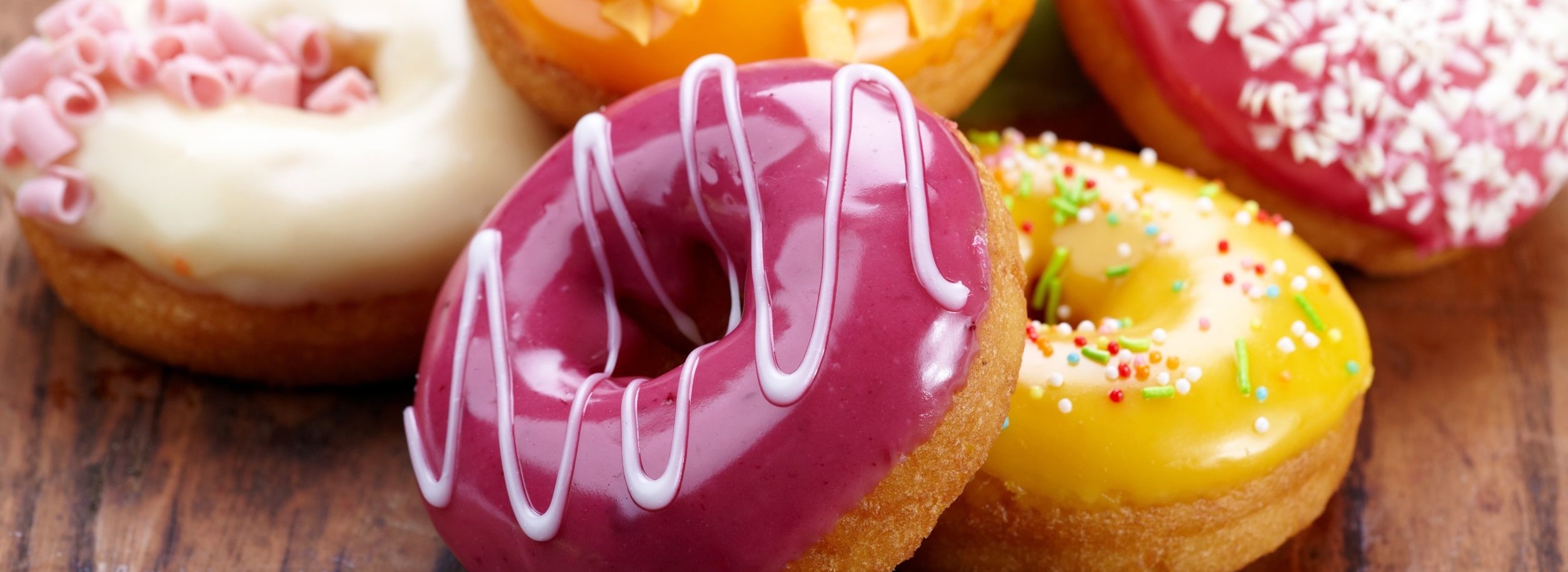
If there is one product that perfectly straddles the line between nostalgic comfort and cutting-edge food science, it’s the donut. The global donut market is valued at USD 11.62 billion in 2025 and is projected to grow to USD 12.05 billion by 2034, at a steady CAGR of 3.81%. While yeast-leavened donuts continue to dominate the market share with that irreplaceable airy texture, the rules of engagement are changing. “Better-for-you” options that don’t sacrifice indulgence are in demand. Join us as we share highlights from our recent Precision & Quality in Donut Making BAKERview seminar.
Ingredient Functionality
We aren’t just mixing flour and water; we are building a complex matrix. To troubleshoot and innovate, we must respect the role of every single grain.
- Wheat Flour: This is our backbone. Beyond structure building, it traps gases and absorbs fat. In yeast-raised goods, we are obsessed with the “Spring Ring,” which is the flour’s ability to rebound during frying, ensuring that light, crispy texture.
- Water & Yeast: Water hydrates the flour and supports fermentation. Did you know that water hardness directly affects dough strength? It’s a detail that separates good donuts from great ones.
- Fats & Sugars: Fat isn’t just for flavor; it facilitates convective heat transfer and controls oil absorption. Meanwhile, sugar fuels the yeast and enhances the Maillard reaction, giving us that golden-brown appeal while extending shelf life.
- Eggs: For Crullers and our chemically-leavened counterparts, eggs are the multi-taskers. They provide steam leavening for volume, lipid emulsification for stability, and thermal setting for structural integrity.
Processing with Precision
Consistency in donut production relies on strict adherence to processing protocols.
For Yeast-Raised Donuts:
The journey is a marathon starting with scaling, then moving to mixing and bulk fermentation, followed by makeup and final proofing, and finishing with frying. The proofing stage is where patience pays off, as it develops flavor and gas volume.
For Cake Donuts:
Although equally technical, the process for cake donuts is shorter. It starts with blending, moves to mixing, then to depositing, and finally to frying. Here, our focus shifts to batter stability to prevent dense, heavy results.
The Mochi Revolution
We can’t talk about current trends without addressing the elephant in the room, or rather, the sphere on the shelf. Mochi donuts are redefining texture expectations. Using glutinous rice flour instead of wheat, these treats offer a distinctly chewy bite and come in that iconic connected-sphere shape. For bakers, it’s important to note that this premium marketing product allows you to offer gluten-variety options and high-end glazes. If you haven’t experimented with rice flour formulations yet, now is the time.
The “Icing” on the Cake
Let’s get technical about the finishing line. Glazing and icing add novel flavor and texture, but they are also a production nightmare waiting to happen if not stabilized. Cracking, separation, and weeping (water migration) are the enemies of visual appeal and shelf life.
This is where ingredient innovation from Vantage Foods saves the day. These icing stabilizer solutions ensure your donuts stay pristine through packaging, distribution, and retail display:
- For versatility: Stabligel Plus is an ideal concentrated stabilizer for snack cakes and fried applications.
- For freeze-thaw resilience: Stabilite Icing Stabilizer is a lifesaver when our glazes need to withstand temperature fluctuations.
- For a dry-blend solution: Perma-Frost is a super-concentrated powdered stabilizer that prevents cracking and weeping specifically on donuts and honey buns.
- For ready-to-use efficiency: The RTU Stabilizer ensures our pre-made icings stay glossy and intact, even under reheated conditions.
Want to learn more? Watch the full BAKERview:
The Quality Control Checklist
Before any donut leaves the production floor, it’s crucial that your QA team runs a strict battery of tests. Some key parameters to monitor include:
- Spring ring (to ensure proper aeration)
- Fat absorption (to avoid greasiness)
- Water activity (for microbial safety)
- Texture (for that soft bite)
- Color (for visual consistency)
Mastering these metrics is the difference between a stellar batch customers love and one that leaves something to be desired.
Get Baking
Donuts present a high-growth market, but margins demand efficiency. The path to profitability lies in reducing waste, extending freshness, and perfecting your finishing. If you are ready to take your production knowledge to the next level, grab our Baking Donuts BAKERguide. Inside, we highlight the basics for high-quality donut production. Download the guide today!
Want to stay up-to-date with BAKERpedia? Sign up for our newsletter today!