
Why Tortillas and Wraps Are Baking Up a Big Opportunity
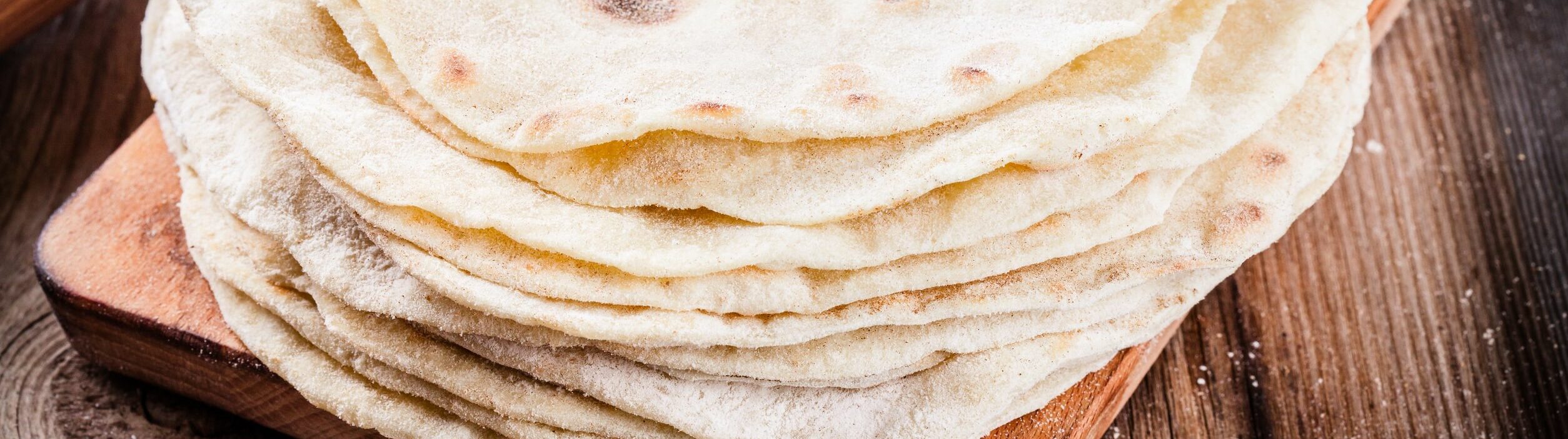
The tortilla market is on the up and up, currently valued at USD 37.7 billion in 2024 and projected to hit USD 57.7 billion by 2032 (a CAGR of 5.45%). For bakers, that means that this isn’t just a flatbread fad. People want to wrap, roll, and fold their way through breakfast, lunch, and dinner. Join us as we share insights from our recent Baking Tortillas & Wraps BAKERview seminar.
A Hunger for Wraps
Tortillas and wraps have become a global vehicle for everything from plant-based proteins to breakfast scrambles. The culinary flexibility is unmatched: a wrap can be a quesadilla, a sandwich alternative, a sushi-style roll, or a low-carb pocket. Consumers crave convenience without compromise, and wraps deliver. But the real growth driver? Health-forward formulations, but with ingredient substitutions, often come the need for technical know-how.
Formulating with Fiber and Protein
Adding fiber or protein to tortillas sounds simple. If you ask any baker who’s tried, they’ll tell you that texture, pliability, and machinability can go sideways fast. Here are some considerations:
High-Fiber Tortillas & Wraps
While these recommendations aren’t one-size-fits-all, they are a good place to start. Incorporate resistant starch, inulin, or pea hull fiber at 5-15% flour weight. During this process, it’s important to closely monitor water absorption, as fiber competes for water, stiffening the dough. A solution to help manage this would be to increase hydration by 2-4% and add an emulsifier to restore extensibility. Fiber also shortens gluten strands, so consider a relaxer like L-cysteine to improve sheeting.
High-Protein Tortillas & Wraps
Wheat protein isolate (vital wheat gluten) is your friend here. Adding 4-8% can help boost protein without beany off-notes. For non-gluten systems, bear in mind that pulse proteins (lentil, chickpea) require binders like xanthan gum (0.3-0.5%) and a hot-press method to avoid cracking. Not to mention that protein increases dough elasticity, which fights you during rounding and sheeting. This is something to factor into your tortilla and wrap production.
The Great Method Debate: Hot-Press vs. Die-cut
Over 90% of retail tortillas are hot-pressed to provide surface smoothness, elastic bite, and tear resistance. However, the dough must be heavily relaxed, which increases your conditioner budget.
Die-cut, on the other hand, is the “throughput king” because of its low cost and high speed. Although if your dough’s too elastic, those rounds will shrink like a wool sweater in a hot wash. Counter by designing oblong cutters (to compensate for 5-8% shrinkage) and by reducing mix time to limit gluten development.
Don’t Let Your Tortillas Crumble Under Pressure
Tortillas and wraps that keep customers coming back for more are soft, flexible, and have a great texture profile. In order to achieve this, it’s important to monitor four critical metrics, including.
- pH: Target 5.8–6.2 for wheat tortillas; 6.0–6.5 for corn tortillas. Lower pH improves mold inhibition but hurts flexibility.
- Water activity (aw): Keep ≤ 0.85 to prevent microbial growth without turning the wrap into a cracker.
- Moisture content: 28–32% for flour tortillas; 30–34% for high-fiber formulations.
- Texture & color: Use a texture analyzer to assess foldability (for example, no cracking at a 180° bend). Color should be uniform, with tan spots (not pale, not burnt).
Mold inhibitors like sorbic acid and propionates are standard, but pairing them with acidulants (fumaric or citric) can help lower pH synergistically.
Want to learn more? Watch the full BAKERview:
Ready to Wrap?
The tortilla and wrap market is driving growth in the global baking industry. Whether you’re scaling or optimizing your hot-press line, precision is everything. Discover processing tips and much more for tortilla and wrap production by downloading our Baking Tortillas & Wraps BAKERguide! Don’t get rolled over by the competition.
Want to stay up-to-date with BAKERpedia? Sign up for our newsletter today!