
The Sweet Potential of Cookies
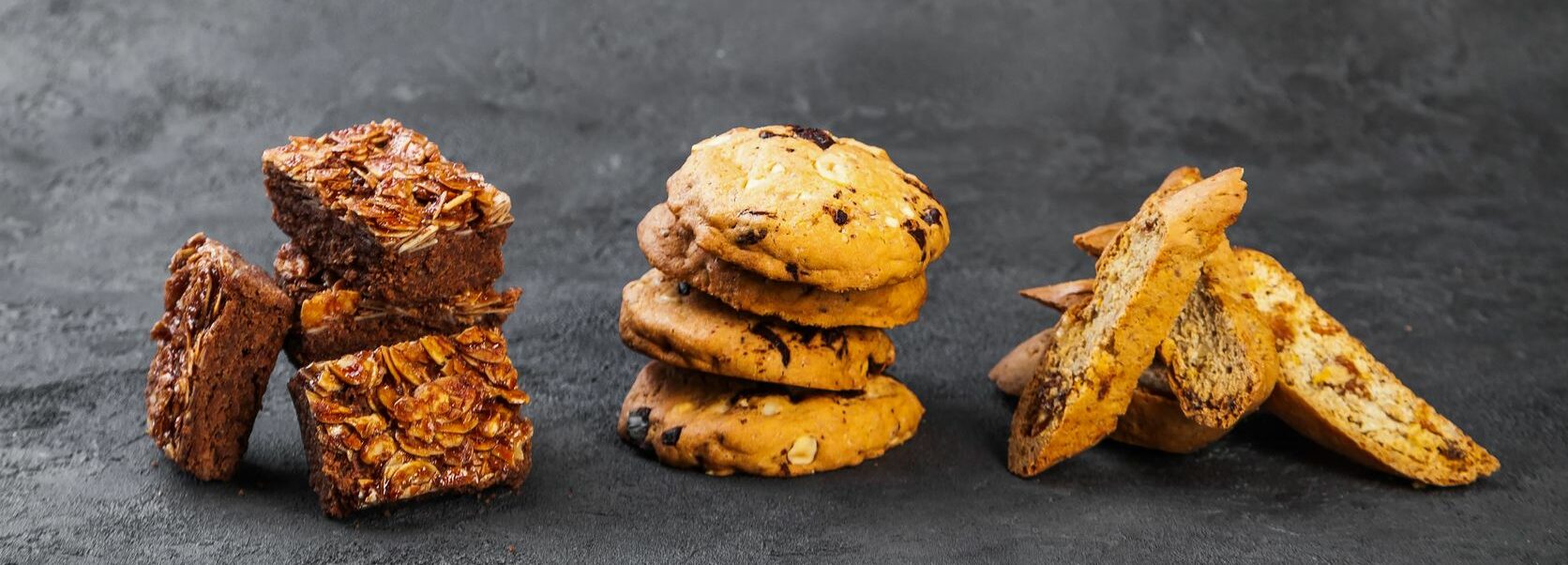
The cookie used to be a simple classic in bakeries. However, in recent years it has transformed from being a reliable, predictable staple to a baked good undergoing a technical renaissance. Recent cookie trends highlight a complex evolution driven by structural engineering, sensory science, and digital merchandising. Let’s break down the science of what’s rising to the top.
Indulgent Cookies
The minis bakery trend plays heavily into the cookie market growth, as consumers are hungry for small, high-quality indulgences that deliver an emotional uplift without breaking the bank. To capitalize on this, bakers have to move beyond the standard drop cookie and formulate products that look hand-crafted at scale. This requires precision in inclusion technology. Real success lies in the strategic placement of toppings such as nuts and fruit, and even the visual impact of a striking icing buttercream.
On a technical level, this means auditing your topping application systems. Calibrating these systems properly allows you to produce a cookie that offers the emotional lift of a specialty bakery item with the consistency of a commercial operation. Quality control here is essential, considering that topping placement feeds into the feel of authenticity that keeps customers coming back week after week.
The Physics of the Bite
That old cookie divide of “chewy vs. crunchy” is long gone. These days, it’s all about textural contrast. Take the viral success of Thin Cookies bakery in New York. They achieved a delicate “snap” with a soft interior. Commercially, replicating this requires meticulous control of the Maillard reaction on the periphery while managing moisture migration in the center.
To achieve these hybrid-cookie formats, like crisp shells with gooey cores, bakers need to rethink their formulation. It involves manipulating sugar crystallization rates, fat ratios, and potentially using laminated dough techniques typically reserved for pastries. For the quality control manager, this means tighter tolerances on bake times and oven temperature uniformity. When you master the contrast of textures, you create a sensory experience that turns a first-time buyer into a devoted regular. It’s a technical edge that competitors without precise process control simply cannot replicate.
Baking Bites for the Camera
It’s no surprise that social media influences consumer purchasing behavior. For bakers, this shifts quality control from purely taste-based to visual durability. If a cookie is going to be photographed, unboxed, and shared on TikTok it must survive the supply chain looking pristine. This requires a focus on dimensional stability. Is your spread factor controlled? Are your vibrant fillings fat-stable to prevent bleeding into the dough during frozen storage?
Expanding your reach today requires your product to be “Instagrammable” by design. This means investing in inclusions that hold their color and shape. Quality control must now ensure that the cookie you design in the R&D kitchen looks exactly the same to the consumer opening the box after a delivery driver has handled it.
Get Baking
Whether you run a large-scale wholesale operation or a high-volume retail chain, cookies offer the perfect platform for low-waste, high-margin innovation. By applying technical rigor to artisanal aesthetics, textural engineering, and visual durability, you are formulating baked goods that have the potential to go viral and build loyalty one bite (and one share) at a time. Our Baking Cookies BAKERguide covers the basics of baking delicious cookies. Download your copy today!
Want to stay up-to-date with BAKERpedia? Sign up for our newsletter today!